Ron Lafferty's 1996 retrial
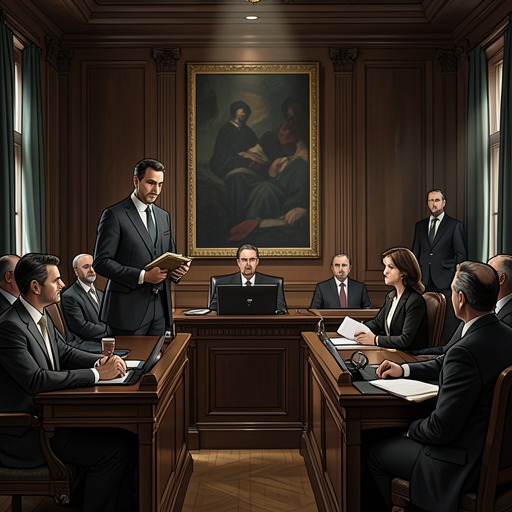
Under the Banner of HeavenRon Lafferty's 1996 retrial put both his responsibility for the killings of Brenda Lafferty and Erica Lafferty and the boundary between religious belief and legal insanity before a jury for a second time. The case returned to court after an appellate ruling found that the original competence determination had used a faulty standard. At the retrial, the defense could argue that Lafferty's beliefs were delusional; the state argued that he was sane and responsible. On April 10, 1996, the jury again convicted him of first-degree murder and related charges.
Why the Case Returned to Court
Lafferty's 1985 convictions were overturned by the Tenth U.S. Circuit Court of Appeals in 1991. The judges accepted that he understood the charges and their possible consequences, but concluded that his paranoid delusional system prevented him from interpreting those consequences realistically. The ruling required Utah to determine his competence again under accepted legal criteria and, if it sought to keep him imprisoned, to try him anew.
That decision made the retrial consequential beyond the question of Lafferty's guilt. Utah's solicitor general warned that the ruling might affect how courts handled other crimes committed in the name of religious belief, including whether claims of divine authority could shield defendants from prosecution. The proceedings therefore had to address both an individual defendant's mental state and the difficult question of how a court distinguishes protected religious belief from a delusion relevant to criminal responsibility.
The Competing Cases
As the March 1996 trial approached, Lafferty's attorneys had only one remaining strategy they believed could save his life: an insanity defense. They had wanted to use that defense in 1985, but Lafferty had forbidden it. This time he continued to insist that he was not crazy, yet stopped short of preventing his lawyers from presenting the argument. The jury's decision would turn on whether his beliefs, including his certainty that God had commanded the removal of Brenda and Erica, were sincerely held religious convictions or symptoms of a disordered mind.
The defense called three psychiatrists and one psychologist, who were prepared to testify that Lafferty was deranged. The prosecution presented one psychiatrist and three psychologists who argued that he was sane and had understood what he was doing. The evenly opposed expert lineups made the trial's central dispute unusually explicit: professional witnesses examined the same defendant and reached sharply different conclusions about whether his religious ideas could be understood as faith or as delusion.
Defense psychiatrist C. Jess Groesbeck traced Lafferty's deterioration to the departure of his wife, Dianna Lafferty, who took their children with her. Groesbeck said Lafferty could not tolerate that loss and diagnosed either a schizo-affective disorder or a delusional disorder. He based his view on beliefs that, in his assessment, could not be changed through reason and were so far outside what the surrounding culture could accept that they qualified as delusional. He proposed that the loss of Lafferty's self-image had led him to construct a new, unreal understanding of himself and the world.
Evidence and the Question of Responsibility
The retrial also changed the evidentiary position Lafferty faced. In the years after the original conviction, Dan Lafferty's attitude changed: accepting that he would spend the rest of his life in prison as part of God's plan, he became willing to speak openly about the killings. Dan said that he had killed both Brenda and Erica, while maintaining that Ron had not wielded the murder weapon. His account nevertheless placed Ron inside the apartment and described Ron's assault on Brenda. If the jury accepted that testimony, Ron could no longer rely on his earlier claim that he had known nothing about the killings.
The case thus brought two questions together without making them identical. Evidence about Lafferty's presence and participation bore on what he had done; the competing expert testimony addressed whether his beliefs and mental condition excused him from legal responsibility. The court had to consider his claimed obedience to God's law while determining whether that belief reflected a delusional system. The larger dispute was not resolved in the abstract: it was tested against the evidence and the specific conduct for which he was on trial.
Verdict and Significance
After four weeks of testimony and five hours of deliberation, the jury agreed with the prosecution. On April 10, it convicted Lafferty of first-degree murder and related charges, reproducing the outcome of his first trial eleven years earlier. The retrial therefore ended with the same verdict, but only after the appellate court's intervention had forced a fresh examination of competence and the relationship between religious conviction and mental illness.
The proceedings exposed the difficulty of drawing that line in a criminal court. Treating extraordinary religious certainty as evidence of illness risked making the legitimacy of belief itself a legal judgment; treating a claimed divine command as sufficient explanation risked obscuring the defendant's responsibility for violence. The jury's verdict settled Lafferty's criminal liability at this trial, while the competing arguments showed why the case had become a wider test of how courts assess religiously framed claims of command and culpability.